Universal cushion covers are meant to make life easier. One cover, many cushions, no fuss. But if you’ve ever dealt with slipping fabric, awkward bunching, or covers that somehow look worse after a few washes, you’ll know the reality doesn’t always match the promise.
So instead of telling you why FlexiFit works, we thought we’d do something different. We sat down with Melvyn, our team lead for Product Innovation at Comfort Works, and asked him to be brutally honest about what’s broken in most universal cushion covers — and what had to change to fix it.
From cheap elastic fabrics to unexpected inspiration from Japanese gift wrapping, this is a behind-the-scenes look at the thinking, testing, and small design decisions that shaped FlexiFit.
How FlexiFit rethinks universal cushion covers
When you look at most universal cushion covers, what were some of the flaws you were trying to fix?
Two things. The first is the fabric itself. Stretchy cushion covers are made from elastic fabrics. They aren’t usually made with really good quality fabrics. So, what you end up with are covers that tend to move and shift around the cushion inserts. Unless you are getting up from your sofa in slow motion, you will always have to adjust the covers to get it nice and smooth again.
Elastic fabrics also tend to be really thin. So it won’t last after a few washes. We’ve seen cases where after two to three washes, you end up with peeling, tearing, and some of them just lose their elasticity. So what you end up with is the covers just looking really bad.
And next is the design. Most stretchy covers come with this big gaping hole at the back because it’s just fastened by an elastic band around it. Great for seat cushions, I guess, because it’s hidden this way. But when you try installing this over back cushions, especially if you have a back rest that’s a little lower, this gaping hole here is really obvious. So, not really great for single use. You also have these weird bunches here. We call them ‘radial bunching’. Depending on how they’re angled, they look like a ray of sunshine, but this ain’t no ray of sunshine. It’s pretty ugly. We think it’s cheap and not well put together.
It seems that fixing the problem meant unlearning some of the most common shortcuts in cushion cover design. What was the biggest “aha” moment in the FlexiFit design journey?
We tried many things to not use elastic fabrics. We tried reducing it. We tried buckles. We tried straps. We tried a combination of buckles and straps and even more elastic fabric to avoid the radial bunching that I mentioned earlier.
Nothing worked until we took inspiration from a really traditional Japanese gift wrapping technique called furoshiki and came up with the idea of having flaps. With flaps you would have a smooth backing that actually solves the problem of the big gaping hole at the back as well as the radial bunching that we were seeing. And that’s it. We realized we had a magic formula on our hands and ran with it.
Was there any early user feedback that really changed the direction of the design?
Yeah, it was something really simple. When we first designed the covers with the flaps and the straps, we noticed that people were struggling for which to do first, like which flap to fold first, you know. We didn’t think it was a problem because we thought the design was self-explanatory, but turns out it’s not.
People were struggling with deciding which way is up and which way is down. So the solution ended up being just putting numbered tags on them. So you could just follow the tags one, two, three, four and five and there you go. You could just install them based on those numbers.

Some of the most important design work is almost invisible once everything comes together. What’s one design detail you’re especially proud of — but most people wouldn’t notice?
Personally, I just like that you could fold the flaps on like an envelope. It’s really satisfying when you pull the sides together. It all comes together in this little neat little package. But that’s just me.
I think most people would agree that the cross straps are the ones that are totally unexpected for a universal cover like this. Its job is basically to anchor the corners in so that the excess fabric after folding the flaps will not pop out from the corners.
We prescribe that you don’t pull it too tight or the corners will just be folded inwards and don’t pull the corners in too deep. With just enough pressure, what you end up with is a really tidy finish at each of the corners. Works really, really well with back cushions to give it a structured look.
You don’t see that with elastic covers because you don’t have this ability to anchor the corners. So, what you get with elastic covers is blobs as the end result. We don’t want blobs. We want it nice and square.
A good fit only works if the cover feels right in everyday use. How do you balance durability, comfort and aesthetics in a product like this?
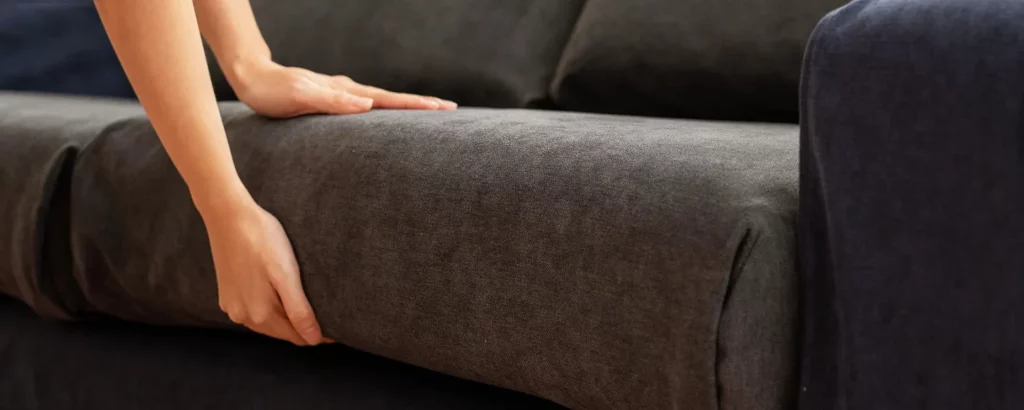
Don’t use cheap fabrics. FlexiFit is actually made from upholstery grade fabrics. We’ve handpicked it to be the balance of uh softness, the balance of durability. We didn’t want it to be too warm or too hot, uh, too cool as well to the touch.
We chose colors that would fit into most people’s homes. They’re generally just very friendly, neutral colors that you could adopt easily to your couches.
And finally, the installation method itself. We didn’t want it to be too difficult, but at the same time, we want it to be adjustable as well to suit the sizes and cushions that people have at home.
If someone was still on the fence about trying FlexiFit, what would you want them to know?
Watch the installation video first. I think, to give you a better idea of how it works and how it’s being installed. I think that’s the first step. The second step, maybe you could just buy one, try it out on one cushion. Um, see how it looks and how it feels. I think that’s the most important one.
The fabric is, I love it, not going to lie. But it is one of the nicest fabrics that I have touched. So, I think you’re going to love it, too.
Check out the FlexiFit installation video here:

Universal doesn’t have to mean compromise
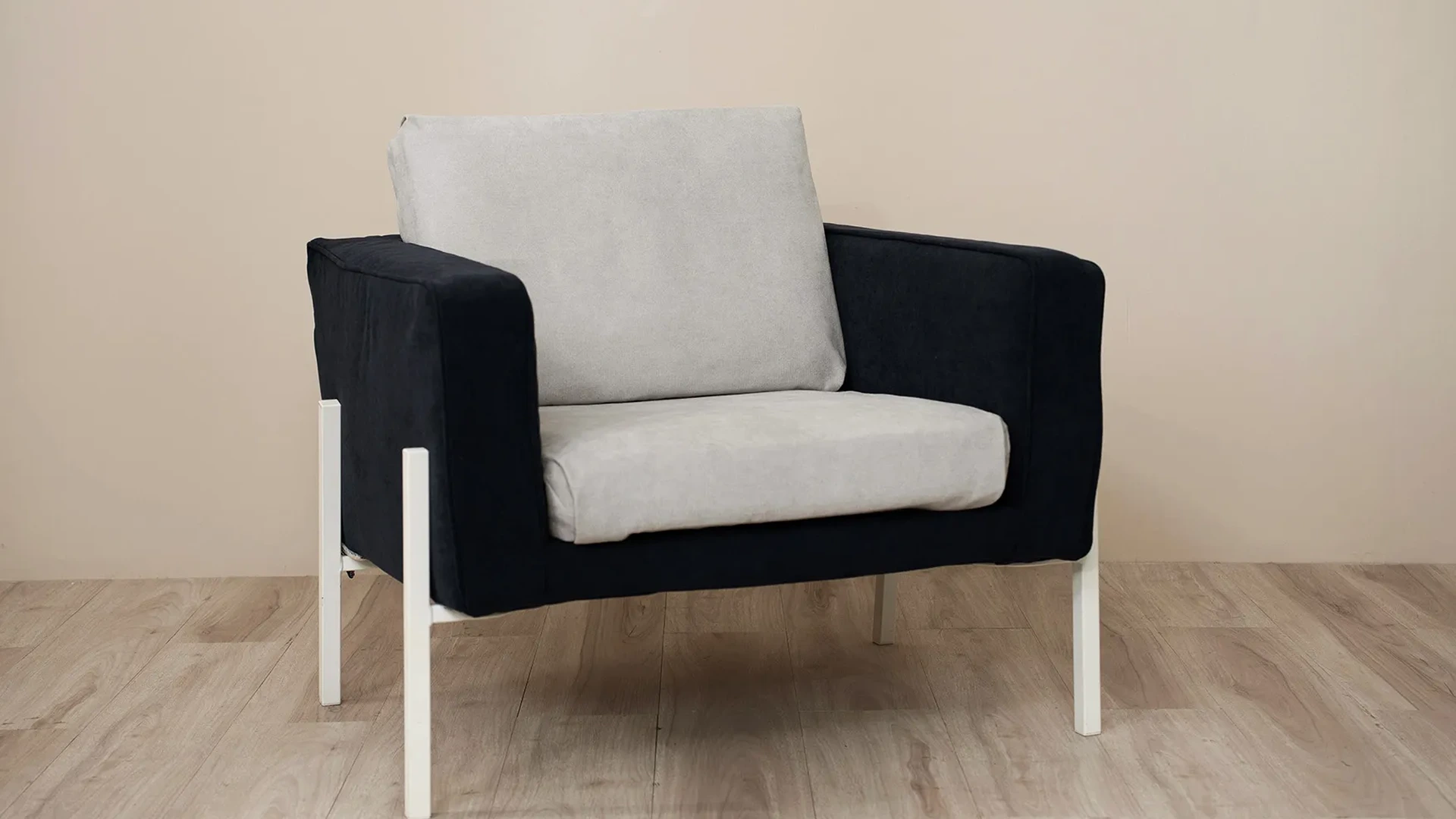
If there’s one thing this conversation makes clear, it’s that most universal cushion covers don’t fail because people install them wrong — they fail because they were designed to take shortcuts. Cheap elastic, awkward construction, and one-size-fits-all thinking can only get you so far.
FlexiFit came from asking a different question: what would a universal cushion cover look like if it were designed properly? The answer wasn’t more stretch or tighter elastic, but better materials, smarter construction, and small details that quietly do their job once you start using it.
If you’re curious, Melvyn’s advice still stands: watch the installation video, try one cushion, and see how it feels in your own home. Because once a cover fits the way it should, you stop noticing it altogether. And that’s kind of the point.
Leave a comment on this post
Read more on sofa guides











Behind the seams
Why replace when you can refresh?
Our sofa covers give your sofa a brand-new look without the cost or hassle of buying new.
Find your perfect couch cover